
There could be an earthquake in Kentucky anywhere, at any time, according to David Davis, Kentucky’s earthquake program manager.
To prepare Kentuckians in the event of an earthquake, the Great Central U.S. ShakeOut earthquake drill is scheduled for Feb. 7 at 10:15 a.m.
“At its simplest, all we are asking people to do is practice the appropriate action of to drop, to cover, to hold on,” Davis said.
To encourage public education and participation in the earthquake drill, Kentucky Gov. Steve Beshear declared February as Earthquake Awareness Month.
Davis said while earthquakes can’t be predicted, scientists study the past frequency of large earthquakes to determine the likelihood of similar large shocks and measure the strain that accumulates along fault segments.
Davis said Kentucky’s proximity to the New Madrid fault line makes the state especially vulnerable to hazardous seismic activity.
“The effects and the shaking of an earthquake are much greater in the central area of the United States as compared to California,” Davis said, “And that is all to do with the geology and the ground we sit on. It allows the waves to travel farther and do more damage.”
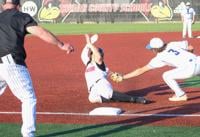
Taylor County and Campbellsville Independent schools will participate in the earthquake drill.
Campbellsville Independent Superintendent Mike Deaton says emergency drills are important for the safety of everyone associated with the school system.
“Any time there is repetition, then people are more likely to learn the behaviors needed to act accordingly if such a disaster were to take place,” Deaton said.
This is the third year of Shakeout and according to Taylor County Superintendent Roger Cook, participation in previous years has helped better prepare students, teachers and staff as to what to do if an earthquake occurs.
“All schools do earthquake drills twice each year,” Cook said. “It is mandated by the state. All drills are important for the safety of our students. We do fire drills every month. Lockdown drills now every three months, earthquake and tornado twice a year.”
Davis said there are many misconceptions about earthquakes that can result in a greater chance of injury or death.
“Well, there are two big ones,” Davis said. “Get in a doorway, which is false, because they’re no stronger than any other area, and the triangle of life.”
The “triangle of life” method began circulating mainly through email and recommends that building occupants disregard “drop, cover and hold on” and instead seek shelter near sturdy items to provide a protective space in the event of a building collapse.
But Davis said the major flaw in this method is that most injuries in earthquakes are caused by falling objects, not building collapses.
“On a grand scale, we have pretty good building codes and you’re relatively safe from building collapses in the United States,” Davis said.
Earthquake preparation doesn’t have to end with the drill. Davis said homeowners can go a step further to safeguard their homes.
“Just look around and see what could fall in the event of an earthquake. We tell people all the time not to put big mirrors or big pictures above your bed,” Davis said.
He also says residents should make sure ceiling fans and light fixtures are secure and use closed hooks to mount pictures.
Ultimately, Davis said, he hopes ShakeOut will increase the public’s awareness about the urgency of earthquakes.
For more information about earthquakes, or to register for the drill, visit the Kentucky Emergency Management’s website at www.kyem.ky.gov/earthquake.
Add new comment
Read and share your thoughts on this story